

As Kenya accelerates its shift toward intelligence-led conservation, Konza Technopolis Development Authority is emerging strongly at the centre of that transition
At the Global Conservation Tech & Drone Forum (GCTDF 2026) in Nairobi, John Paul Okwiri, CEO of the authority, framed Konza not just as a smart city but as critical infrastructure for scaling conservation technology beyond pilot projects.
“This is where conservation meets technology,” Okwiri said, adding that Konza is providing a regulated environment where innovation can move from concept to deployment.
From Pilot Projects to National Systems
For years, Kenya’s conservation sector has tested drones and AI tools in fragmented pilots. But speakers at the forum, including Erustus Kanga of the Kenya Wildlife Service, stressed that the next phase demands institutionalisation.
Kenya’s conservation estate is vast: 24 national parks, 29 national reserves, six marine reserves and more than 276 community and private conservancies. Together, they cover approximately 24 per cent of the country.
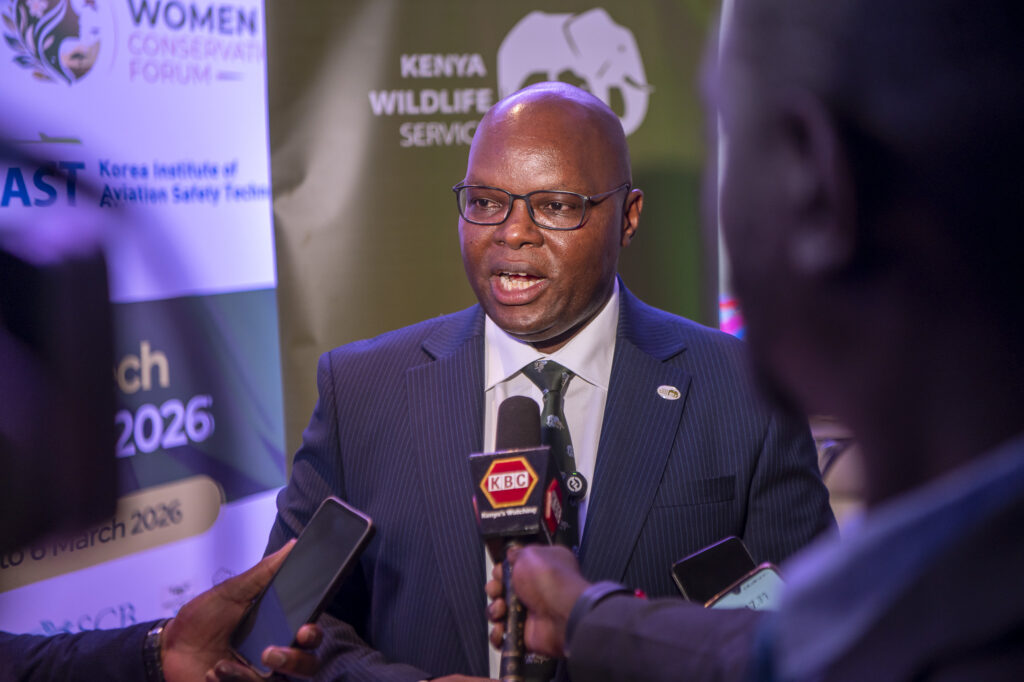
“That network can only now be surveyed and monitored using technology,” Prof. Kanga said, adding that, as the Kenya Wildlife Service, they have embraced the use of drones.
KWS is integrating drones with artificial intelligence systems and long-range communication networks to enable real-time data collection across expansive landscapes, including cross-border conservation areas. The aim is to strengthen protection for endangered species such as elephants, rhinos, cheetahs and lions, while improving habitat monitoring.
“Our expected outcome from this conference is the embracing of technology, embracing of artificial intelligence to support our conservation effort,” Prof. Kanga added.
Konza’s role, according to Okwiri, is to supply the backbone infrastructure:
- A licensed national drone corridor with regulated airspace
- A National Data Centre capable of handling big data from drone surveillance
- Cloud computing systems that support AI and machine learning
- Compliance with Kenya’s Data Protection Act (2019) and civil aviation regulations
“Drone technology requires huge data processing capacity,” Okwiri said, and revealing that they are ensuring that conservation data is securely processed and preserved within the country.
Conservation in a Smart City

Konza, often branded Africa’s Silicon Savannah, sits on 5,000 acres, land that Okwiri noted was not empty when development began.
“We did not find empty land. We found living residents,” he said, referring to wildlife within the site.
A 1,000-acre wildlife corridor has been preserved inside the development, turning the smart city itself into a live demonstration of coexistence between infrastructure and biodiversity.
Later this week, delegates will travel to Konza for live drone demonstrations, showcasing real-time deployment under regulated conditions.
Youth at the Centre of the Shift
Beyond hardware and data systems, Konza is betting on people, particularly Kenya’s youth.
Through its Jitume Digital Enablement Programme, the authority has established 1,450 digital hubs across wards nationwide. The hubs provide connectivity, training and digital work platforms, positioning young people to participate in emerging sectors, including conservation technology.
“With Africa’s youth bulge, we must ensure they are digitally enabled and up-skilled,” Okwiri said. “They should not just observe the digital revolution, they must build it.”
A Broader Strategy
The forum, coinciding with World Wildlife Day, emphasised a national ambition: embedding drones, AI and real-time analytics permanently into conservation command structures.
If successful, Kenya’s model could redefine how protected land, nearly a quarter of the country, is monitored and managed.
As discussions move from Nairobi boardrooms to live drone flights in Konza’s controlled airspace, the message from policymakers and technologists was clear: the future of conservation will not be improvised. It will be engineered.
And in Kenya’s case, which engineering may begin in a smart city built for code, now recalibrated for wildlife.