
By Melisa Mong’ina
As agriculture remains key to Kenya’s economy, persistent challenges across food production, financing and marketing continue to limit the sector’s ability to provide access to safe, nutritious and affordable food.
To address this, African Food Fellowship (AFF) cohort 5 graduates are developing practical solutions that will help combat barriers affecting food systems in the country.
Quinta Onditi, an AFF Fellow and Head of Partnerships at Hello Tractor, an agricultural technology company that supports smallholder farmers across Africa, said the company uses a pay-as-you-go, lease-to-own model that enables farmers to acquire tractor ownership.
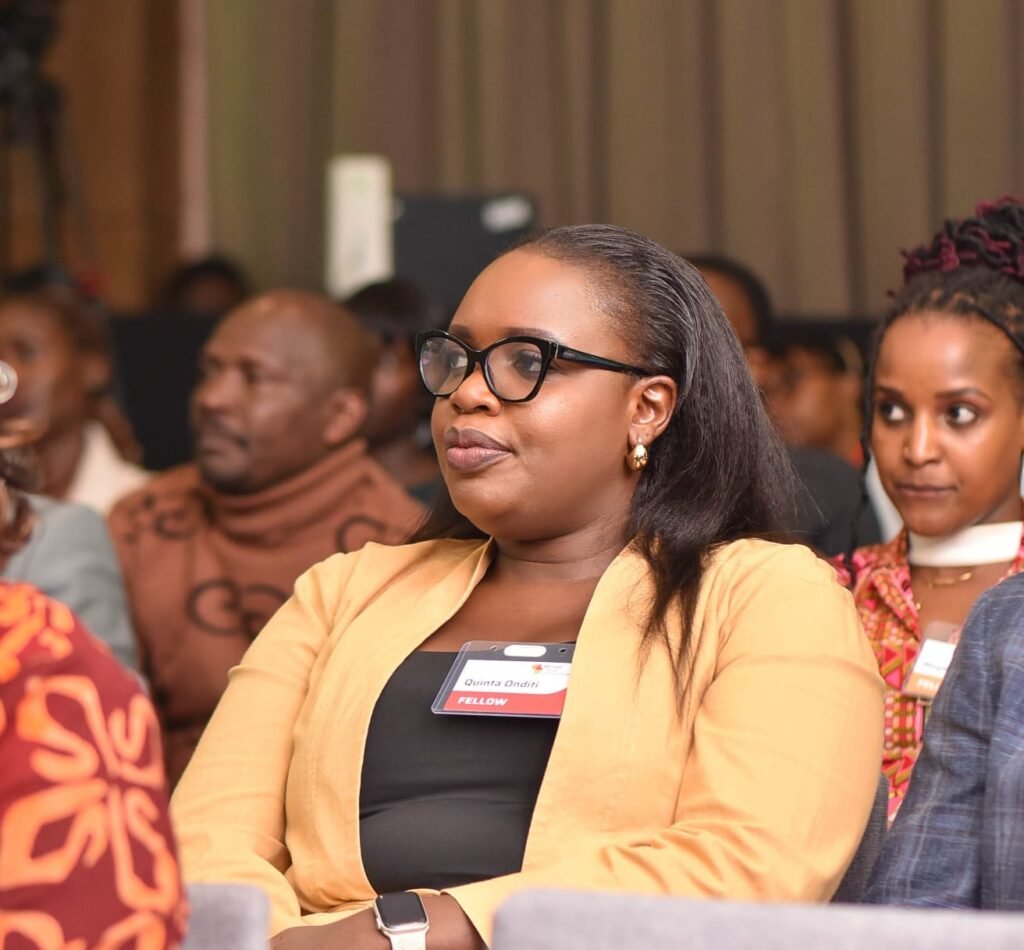
Her Food System Action (FSA) aims at removing financial barriers that limit women’s access to tractor ownership. Initially, their company had around 20 percent of women ownership in their portfolio. Over time, they grew into 40 percent but suddenly the number dropped to 25 percent.
“When I joined Hello Tractor, we had a mixed programme of both men and women,” said Onditi. “We really struggled with the percentage of women ownership in our portfolio. That sort of oscillation is what inspired me to think of how best I can support these women.”
She developed a proposal to secure funding that would enable the women to access tractors more quickly and begin serving farmers without the burden of raising the initial payment. Luckily, they were able to get funding from Mulago Foundation for 50 women renters to be supported with down payment assistance.
“It was an opportunity for me to pitch and get support so that women don’t have to pay that 5 percent as they have already aggregated the 1,235 acres which is the baseline for them to access the tractors and start servicing,” she explained.
Onditi underscored that mechanisation not only improves farm productivity but also reduces the heavy manual work that women often carry, especially involving their children in farm work mostly during harvesting. She stated that within the programme 12 out of 50 women tractor owners have so far been supported.
“It’s not just shaping food systems and how we produce, it’s about impacting livelihoods at the household level,” she added.
Meanwhile, Dr. Janeth Chepkemoi, an AFF Fellow and a lecturer in Soil Science at the University of Nairobi, said her Food System Action focuses on promoting climate-smart agriculture by encouraging farmers to use locally available resources to produce biofertilizers that not only improve food productivity but also support environmental sustainability.
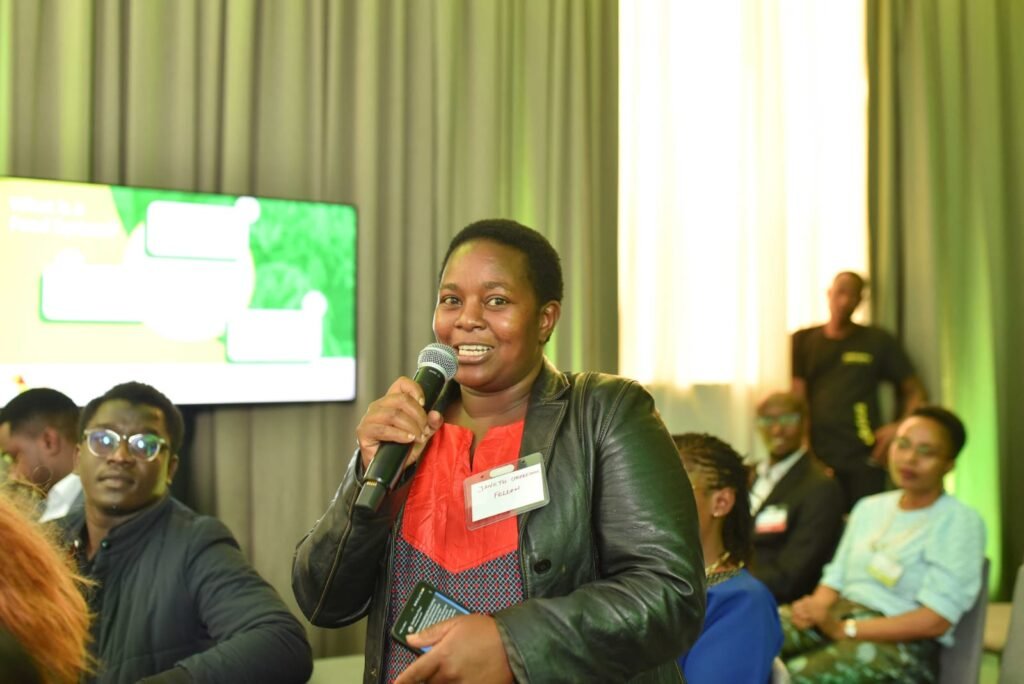
Chepkemoi’s initiative also involves young learners as she believes they are agents of change. She is working on establishing a programme that combines agroecology and biofertilizer production in primary schools.
“I target young learners because they are the ones building the future generation,” she said. “After approaching a particular school, I was given a chance to develop agroecological solutions that will benefit farmers, particularly in urban areas, and also enable our students to get nutritious food.”
She cautioned the excessive use of synthetic fertilizers and chemicals, stating that they damage the soil, leading to lower crop yields.
“As a farmer, you should aim for optimum production, not maximum production,” she urged. “Feed the soil so that the soil can feed you.”
Chepkemoi encouraged farmers to make their own organic fertilisers using readily available materials such as banana peels. Through fermentation, these peels can produce good fertilizer rich in phosphorus, making it suitable for crop growth, especially during the flowering stages.
“Banana peel is a good source of nutrients for our plants. You can even ferment it for a week and then use the juice one liter per 20 liters as a good foliar fertilizer,” she explained.
She emphasised the need to recycle food wastes and crop leftovers to make organic fertilisers which are affordable and environment friendly. Chepkemoi is looking at creating integrated farming, particularly in the urban areas, by bringing together crop production and livestock so that different components of the farm can support one another.
“I am targeting the goats and the chickens because from livestock you can get good organic fertilizers to feed your farm and the same excess food we get from the farm can feed your livestock,” added Chepkemoi.
The African Food Fellowship’s Role in Building Leaders to Transform Food Systems in Kenya
According to Gacoki Kipruto, Country Lead for the African Food Fellowship Kenya (AFF), the fellowship develops and connects leaders who identify and tackle the root causes of food system challenges in the country.
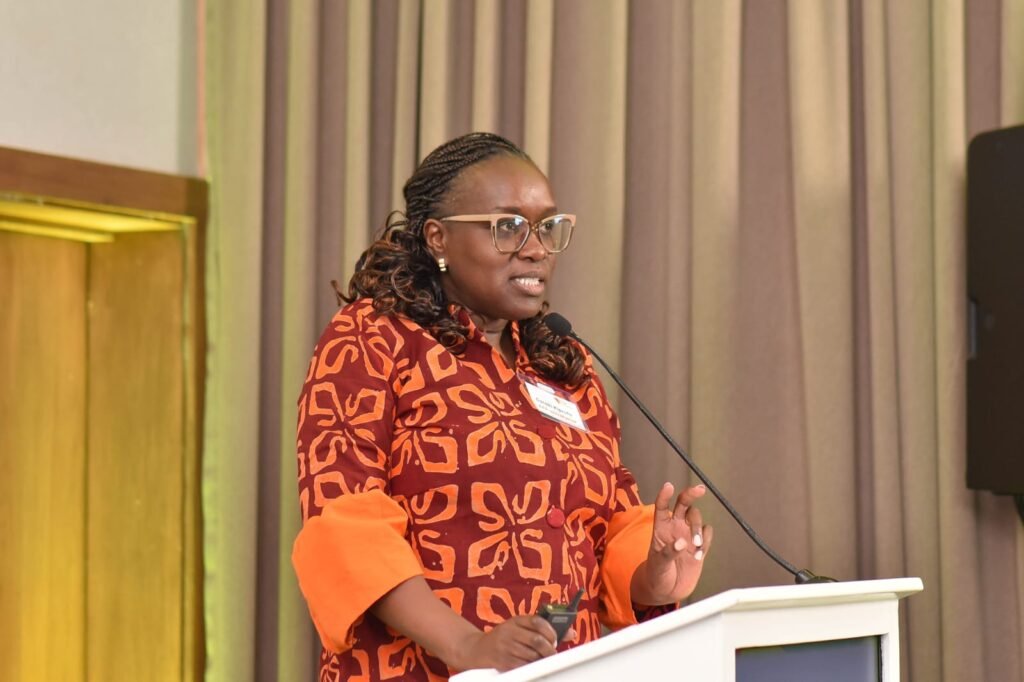
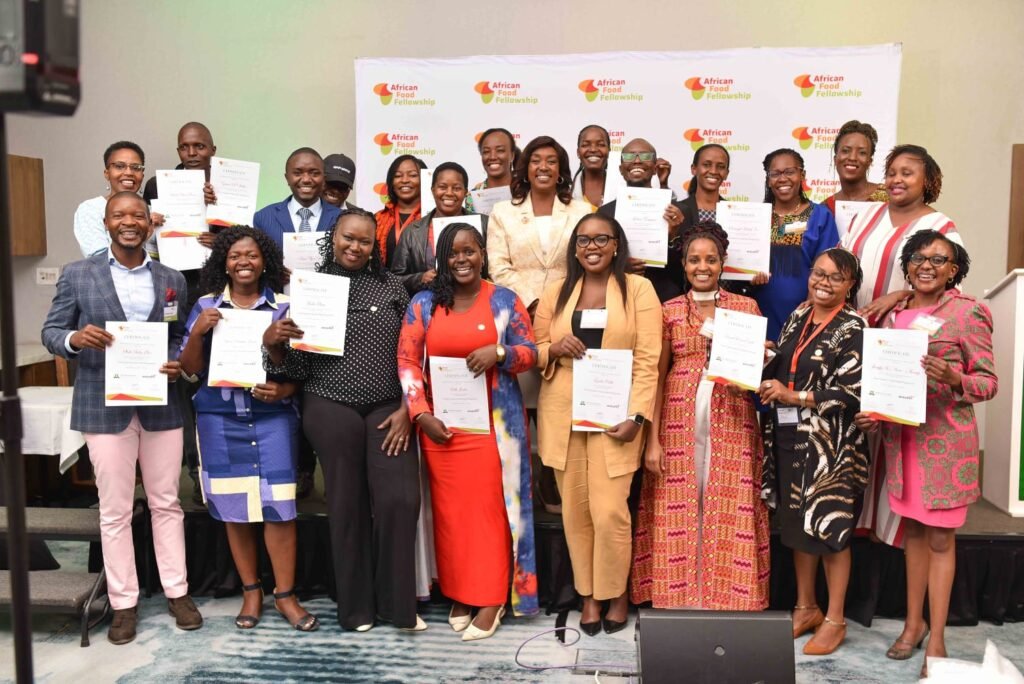
“Today we’ve graduated the fifth cohort in Kenya,” said Kipruto. “The 23 fellows have successfully completed a prestigious 10-month Food Systems Leadership Programme.”
She said the fellowship focuses on three impact areas including horticulture, the blue economy and agri-finance, under which fellows develop Food System Actions (FSAs), practical initiatives designed to address persistent challenges in Kenya’s food system.
Kipruto added that the fellowship provides fellows with opportunities to showcase their work, and share the impact they are making as well as the leadership and skills they have gained throughout the programme.
“We are not trying to impact everything at the same time. We picked those three impact areas because when you’re dealing with a stubborn problem, you have to chip at it slowly. Otherwise, you may solve one problem only to find another has grown,” she said.
The African Food Fellowship operates in Kenya, Rwanda, and Zambia, with Zambia being the newest country to join the programme. Across these countries, the fellowship has over 300 fellows working to transform Africa’s food systems.